 Ashley Farley is the Senior Officer of Knowledge and Research Services at the Gates Foundation. For the past decade she has led the foundation’s Open Access Policy’s implementation and associated initiatives. She completed her Masters in Library and Information Sciences from the Information School of University of Washington. She has a deep passion for open access and strongly believes that freely accessible knowledge has the power to improve and save lives.
This email interview, with Santosh C. H. for Open Interview, explores the evolving landscape of open access through the lens of funder policy, library practice, and global equity. Drawing on the Ashley’s experience at the Gates Foundation, it examines the motivations and principles behind open access policy, the challenges of implementation, and the role of initiatives such as Gates Open Research in rethinking scholarly publishing. The discussion also engages with critical issues including cost structures, prestige-driven systems, researcher incentives, and persistent inequalities between the Global North and Global South. Further, it reflects on how impact can be meaningfully assessed beyond traditional metrics, the shifting responsibilities of libraries, and the broader cultural and structural changes needed to advance a more equitable and sustainable open access ecosystem.
.
• You have worked at the intersection of libraries, philanthropy, and scholarly communication. With this background, where do you see the greatest opportunities and barriers to achieving truly equitable access to scholarly knowledge today?
Let me share some key barriers and opportunities.
To start with the barriers first– the main obstacle is the evaluation of research and researchers, which hinders progress toward open access and limits innovation in sharing knowledge. Many researchers avoid new publishing models that could better advance science because they are not recognized by traditional career advancement systems. The publishing landscape remains stymied by outdated infrastructure and practices from the print era.
Now opportunities– I try to be an optimist and believe that there are a lot of opportunities to achieve truly equitable access to scholarly knowledge. Especially, with the technology that exists– knowledge has the potential to be created, shared, discovered and built upon in innovative and interesting ways that we have not even thought of yet. This is exciting to me but the path to get there is fraught with the barriers. If researchers felt that they had more power and autonomy to drive change the system could change overnight. The current system– especially the part that is commercially focused– is quite extractive from the research community. If researchers– stopped giving their work, expertise, and time to these venues and instead supported more “value-aligned” venues the system would quickly change.
• As Program Officer for Knowledge and Research Services at the Gates Foundation, what motivated the foundation to adopt a strong open access policy, and what core principles guide its implementation?
The primary rationale is that the core outcome of open access to research aligns closely with the foundation’s overarching vision and objectives— to enhance and save lives on a global scale. Access to reliable information is essential for achieving this mission. The foundation is dedicated to increasing the speed, accessibility, and reuse of research to facilitate scientific progress, collaboration, and innovation. Initially, the first version of the Open Access (OA) policy stipulated that journals must offer a paid OA option, following the example set by leading funders such as the Wellcome Trust. As a result, certain high-impact journals did not meet compliance requirements.
In 2018, the foundation joined cOAlition S, a coordinated international initiative aiming to establish OA as the norm, and the OA policy was revised to align with Plan S guidelines. This shift introduced more prescriptive principles regarding financial support and compliant pathways to OA. Importantly, the updated policy incorporated non-financially encumbered routes, allowing repository sharing as a means of compliance. Additionally, the foundation ceased supporting hybrid-journal article processing charges (APCs) to achieve open access.
These changes have refocused and refined the foundation’s approach to OA, seeking better alignment between goals and implementation. Presently, there is an increased emphasis on realizing the impact of open access within a more inclusive and equitable ecosystem. The commitment to OA policies remains central to the foundation’s mission and values, maximizing the influence of supported research and ideas.
• In your paper, you emphasize the responsibility of funders and policymakers to respond to community criticism and learning. How has this feedback—particularly from librarians and researchers—influenced the way the Gates Foundation approaches open access policy today?
With policy of this type there is a balance to strike – how do we take into consideration librarians and researchers and their current situation, their lived experiences and the behavior and system change we want to see. As I already mentioned that the first iteration of the OA policy meant that certain journals were not compliant for our grantees to publish in. We soon heard from grantees that this had potential to negatively impact their career advancement. With each policy change we have tried to better balance the burden that researchers face when trying to comply with OA policy yet still achieve requirements for career advancement. This is one of the reasons that we recently shifted which version of the article we are requiring to be made openly available. Preprints are the last version of the article that authors have full control over before the manuscript enters the journal/publisher ecosystem and their rights begin to be stripped away. This creates friction in their complying with the OA policy and achieving their publishing aims.
In a broader view since we have launched the OA policy in 2015, we have tracked research and conversations around the equity, affordability, and growing commercial control of publishing. One of the early criticisms of Plan S is that it further entrenched open access in the APC model. While we stopped paying for hybrid journal publications, we saw a rise in mirror/sister journals or new fully open access journals that our funded work would be funneled to in order to obtain those APC payments. This clearly was not achieving the “flip to open” we had aimed for in changing the system. Tracking research documenting the trends in the rise of APC prices was important in deciding how we can best support equitable OA publishing.
From a librarian’s perspective we listen to their experiences in vendor management, their budget constraints, and how they envision a better, more equitable knowledge future. This requires different strategic thinking by funders who are typically focused on funding individual projects and research – not necessarily the dissemination or preservation of those outputs. Initiatives are underway to urge funding organizations to support the long-term financing of essential infrastructure, which facilitates the sharing, preservation, and utilization of research.
• Open access policies are now common, yet compliance remains uneven. In your view, are mandates alone sufficient, or do we need a cultural shift in how researchers perceive publishing, prestige, and reward systems?
No, mandates alone are not sufficient. I worry we have reached a saturation point on how many funders will institute mandates – although I am excited about work that I have been doing with Creative Commons to encourage funders to adopt a preprint policy. To me, a preprint policy is the easiest, most affordable, and most equitable research dissemination policy to implement.
A major barrier to change is the need for a cultural shift. I present our OA policy as a tool to increase impact, not just a formality or penalty for grantees. The 2025 policy update aims to move away from prestige in publishing and promote equity and access, emphasizing preprints over expensive APCs to reflect our values.
• Translating open access policy into everyday research practice is often challenging. From your experience, what have been the key lessons learned while operationalizing the foundation’s open access policy?
I could not agree more! One of the key lessons I have learned is how to concisely and clearly articulate the “why” of the open access policy. When we are asking researchers to make different choices and change their behaviors we want them to intrinsically understand the motivation. This can be especially hard to do in the publishing space when even the most senior and prolifically published researcher might not understand important aspects of the publishing process – such as author’s rights, copyright, financial and access barriers to research. I still think that there is opportunity to improve on the messaging and it is something I am always reiterating on.
For engagements with publishers- I have learned that there is a clear delineation between non-profit, mission driven publishers and those that are commercially focused. The latter are less motivated to change and are often the first to quickly adapt to any policy change funders may make to continue to protect their bottom line. I completely understand this but I do not think it is healthy for the research ecosystem.
• Impact is central to the foundation’s work. How do you assess whether open access to funded research is truly making a difference in areas such as global health, development, and innovation? Moreover, from your experience, how should impact be understood in open access—beyond citations and downloads? Are there any alternative indicators that better reflect social, policy, or community-level outcomes?
This is a challenging question for which I do not have a great answer for – yet. It has been a subject of ongoing consideration for many years. From a broader perspective, reducing barriers to accessing and reusing research increases its potential impact. However, comparisons with closed research are difficult, as each publication is unique, and factors such as funding and available resources can influence the appeal of research to prominent journals, thereby expanding its reach. Nonetheless, smaller or less well-resourced laboratories are also capable of producing significant and impactful research, though current metrics do not adequately capture this contribution. The resolution likely lies within the wider framework of open science. While access to articles is valuable, it represents only a snapshot and curated narrative of the research process. Access to underlying data, code, and supplementary materials is far more beneficial for advancing research. It may be prudent to reconsider the emphasis on the article as the primary vessel for information, given rising costs and technological advancements that offer alternative means of dissemination. I think that the PLOS Open Science Indicators are a great start to better defining and measuring the impact of open science.
• Please tell us about Gates Open Research which represents a significant departure from traditional publishing models. What gaps in the scholarly communication ecosystem was this platform designed to address?
The Gates Open Research model, to me, represents where the publishing ecosystem should be headed – a post-publication, open peer review, open access platform.
To me, this solves many of the current pain points. It avoids publication delays with a preprint-first approach, so findings are shared when researchers are ready to share. Research is published and reviewed without an overall “accept” or “reject” decision. While the articles will not be fully indexed until they pass the peer review process, this focuses more on the accuracy of the article rather than whether it fits within a journal’s scope or meets a certain level of novelty. Currently, the publishing ecosystem is paying a high cost for non-transparent and often duplicative peer review processes, and this model eliminates the opaqueness of that process. As a reader, I think we place too much faith in peer review as a quality control mechanism. We don’t know who the peer reviewers were, we don’t know the comments, and we don’t know how the authors responded. All of this is made transparent to the reader on the Gates Open Research platform.
Moreover, it avoids journal cascading and journal shopping. If a grantee author chooses to publish on Gates Open Research, they cannot submit elsewhere. This means that even if the article does not pass peer review, it cannot be submitted elsewhere. This cuts down on the potential duplication of effort by peer reviewers and avoids the article being published in a journal without addressing major concerns—where it may be easier to publish overall. As far as version control is concerned, it still surprises me that more journals do not have a model that allows for updates or changes. The way corrections or retractions are handled is still stuck in the print era, and there is growing research showing how problematic this approach is, as retracted research can continue to be cited (although it is not always clear whether those citations are in support or contradiction).
I am a big supporter of the Publish, Review, Curate movement and I am excited to be involved in the PRC Alliance Working Group. I think this structure will help better facilitate the information world we live in. There are too many papers for humans to read at this point and AI is becoming the main tool researchers are using. I also do not think all articles require peer review as it is conducted now. If the underlying data is not available, how can one accurately conduct peer review? Most flaws, errors, or fraud are discovered post publication when another researcher is attempting to replicate or reuse the data.
• Many critics argue that current open access models risk replacing reader paywalls with author-side barriers. How does the foundation address concerns around APC-driven inequities, especially for researchers in low- and middle-income countries?
This is absolutely a huge risk that is currently playing out as a valid concern. It was not the intention of the open access movement but even the most well-intentioned publishers are grappling with the reliance on APCs. It does cost to publish research, there is critical infrastructure to support, and people should be compensated for their labor. The main way we have been addressing the concern is to no longer support paying APCs. We are no longer participating in the worsening APC market. However, that does not solve for the underlying issue – well-funded labs will continue to spend non-Gates money however they like. Whereas, under-funded labs will continue to struggle when faced with APCs. I encourage grantees to find alternative, cost-effective ways to achieve open access (through preprinting or green open access) and to let journals know that APCs are a barrier. I think journals need to take more responsibility in finding solutions to this issue. Waivers are not equitable but they help in the meantime. I like to think that supporting more equitable open access business models as the foundation has started to do will have a positive lasting impact. Models like Diamond Open Access and Subscribe to Open eliminate the issues with the APC model.
• In your paper, you also note that a significant portion of publishing costs appears to be linked to prestige and the processing of rejected papers, rather than dissemination itself. From a funder’s perspective, how can policy interventions help shift value away from prestige-driven costs toward more efficient and equitable publishing models?
A policy intervention that changes what “counts” for compliance– for example a preprint – and what it “pays” for – stopping APCs – will drive a shift away from prestige-driven costs. When you pay $13,000 for a Nature article to be made open access you are signaling that the value is worth it. When really there is little difference in the services provided by the journal than one that charges $5,000. There are not many signals in the funding ecosystem that there is more money being made available to publishing or infrastructure. Thus, for a transition to a more efficient and equitable publishing model to be possible it will need to be sustained by funding divested from the current system. Funder and institutional policies can send a strong signal in the broader community and if others institute similar policies there is a real opportunity for change.
• Your paper also highlights that because publishing is closely tied to career advancement, researchers have little incentive to experiment with new journals or business models. What would a solution or a ‘win-win’ framework look like—one that rewards innovation without jeopardizing a scholar’s professional future?
Great question! Institutions could better highlight, celebrate, provide extra funding or support to the core of the research – not where it is published. Institutions could start their own experiments.
• In your paper, you observe that several countries outside the traditional centers of scholarly publishing have developed cost-effective and sustainable open access solutions, and that the Global North should learn from these efforts rather than overlook them. From your perspective, what have the Global South and Global North respectively achieved in key areas of the open access ecosystem—such as infrastructure, funding models, policy implementation, and community governance—and where do significant gaps still remain?
The Global North has used its resources and power to drive policy and infrastructure, often shaped by colonial perspectives of knowledge and quality. In contrast, the Global South has maximized its limited resources, fostered communities, and emphasized sharing research over prestige or career growth.
In recent years, the Global South has made significant progress in challenging the traditional perspectives held by the Global North regarding research and knowledge. This shift is fostering a more equitable global system that better represents how research is conducted, utilized, and assessed worldwide.
• From a policy and practice perspective, how do you see the role of libraries evolving in supporting open access, open data, and responsible research dissemination?
Libraries are doing incredible work in rethinking and imaging the future of open science and responsible research dissemination. They are important stewards and purveyors of knowledge. There is a large opportunity for libraries to divest from big deals, subscriptions, APCs and reinvest in emerging equitable and more sustainable models. As libraries continue to face budget cuts there is a need to pivot and work collectively to support a system that benefits all libraries and research communities. I am encouraged by the creation of mechanisms to better evaluation vendor partnerships – such as a vendor scorecard. As libraries set policies and practices that center around their fundamental values and mission – then we will see lasting impact.
• Finally, looking ahead, what recent trends or emerging developments in open access and scholarly communication do you believe will have the greatest impact—and how can libraries position themselves strategically in this changing landscape?
The growing momentum to reclaim the scholarly communication from commercial control and interest is incredibly promising and inspiring to see. In my opinion it is the community of advocates, researchers, librarians, and others that are coming together to build a vision for the future that will have the greatest and lasting impact. I see this with my work in the Diamond Open Access community. After having attended the 3rd Diamond Open Access Summit in Bengaluru, India I have renewed energy to scale not only the diamond model but grow the community that supports it. I am also a big advocate for the Subscribe to Open Community of Practice. It is one of the only times I have been involved in a truly collaborative group of publishers, librarians, and funders working towards a common goal. The publishers are taking risks and transparently sharing learnings. There is a lot of promise here.
The biggest impact will come from the convergence of openness, policy, and technology—and libraries, researchers, and funders, that position themselves as active shapers of that ecosystem, rather than passive supporters of it, will be central to what comes next.
*****
Note • All answers and opinions expressed in this interview are those of the interviewee. A few questions are rephrased and the seventh answer is rearranged using AI tools.
Cite • Hulagabali, Santosh C. (2026 April, 21). Ashley Farley: Reducing barriers to accessing and reusing research increases its potential impact. [Blog post]. Retrieved from: Ashley Farley: Reducing barriers to accessing and reusing research increases its potential impact
Credits • Photograph of interviewee: Ashley Farley; The interviewer acknowledges the opportunity provided to him by the International Overseeing Committee of the 3rd Diamond Open Access Summit 2026 (held in Bangalore) to network with global experts in the open access domain.
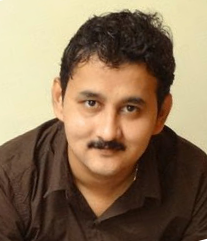 Santosh C Hulagabali, PhD, is an Editor of Open Interview. He heads Central Library of Central University of Haryana. He is passionate about anything that is creative, challenging and positively impacts self and others. Email: santosh@cuh.ac.in

The interview with Ashley Farley is highly informative and very much appreciable, especially from the perspective of library and information science professionals. It clearly brings out the significance of open access initiatives in removing barriers to knowledge and enhancing the visibility and usability of research outputs. Such initiatives are very helpful for the academic and research community, particularly in developing countries, where access to costly journals is often limited. The interview nicely explains the role of funders, libraries, and researchers in promoting equitable access, which is truly encouraging and inspiring for librarians who are working towards knowledge dissemination.
It is also worth appreciating that the discussion highlights practical challenges and provides constructive suggestions like the use of preprints and alternative publishing models. This kind of initiative is very useful in motivating the research community to adopt more inclusive and sustainable practices. The emphasis on collaboration, transparency, and community-driven approaches is highly commendable. Overall, this interview is a valuable contribution and a guiding resource for librarians and information professionals, and such efforts should be strongly supported and promoted for the betterment of the global knowledge society.