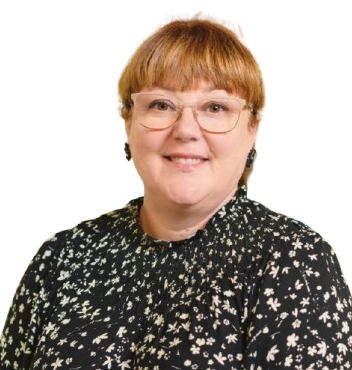
 Tracy Creagh is Journal Manager in the Office for Scholarly Communication, Queensland University of Technology Library, managing their collection of Diamond open access scholarly publications. She has over two decades of experience in higher education, primarily focused on research support.
Tracy is also currently a member the ALMASI International Advisory Board; and Co-convenor of the Australasian Scholarly Communications Community of Practice Diamond Journal Publishing group supported by Open Access Australasia and the Council of Australasian University Librarians. She also works as Communications Assistant at DOAJ (Directory of Open Access Journals) – supporting international engagement via blogs, social media and support for projects, collaborations and events.
In an email interview with Santosh C. H. for Open Interview, Tracy shares her insights on open access, noting that despite significant progress, misconceptions about open access still persist. She observes that countries like Australia need to engage more actively with global initiatives. Drawing on her work at QUT and beyond, she emphasizes the central role of libraries in managing and supporting open access publishing, particularly through Diamond open access models and collaborative communities that enhance quality, visibility, and sustainability. She also highlights ongoing challenges related to transparency and long-term viability, while expressing optimism for a more equitable and community-driven future for scholarly publishing.
.
.
• What key global trends and developments do you observe in the open access domain, how is Australia positioned within this evolving landscape?
I have been involved with open access (OA) for over 15 years now, specifically Diamond journal publishing in academic libraries, but l am genuinely concerned- Australia is getting left behind in terms of the development of international initiatives that truly scale up OA – projects like DIAMAS, and now ALMASI. These are dedicated activities that improve the resilience of the OA model, but also proactively develop strategies, guidelines, resources, that we can all draw upon, and importantly, collaborate with policymakers and research funding organisations who can actually enact real change. This is the missing part for us in Australia– we lack a joined-up, coordinated approach at a higher level. We do advocacy well (Open Access Australasia and CAUL), and we have mechanisms for capacity building (via communities of practice), but no policies or strategies at a national level to move OA further.
• In your role as Journal Manager, Academic Journals at Queensland University of Technology (QUT), what does managing the full lifecycle of institutional open access journals involve, and what are the major operational or strategic challenges?
People underestimate the work of editorial teams. My main role is to facilitate the publication of accepted manuscripts, so I work directly with editors, authors, reviewers, copy editors, as well as those supporting the open journal platform we use. Ongoing work includes- website maintenance, issues management, forward planning and policy updates. And of course, post-publication work which includes indexing, internal reporting, and external engagement (via social media). For our editorial teams, the major challenge is finding peer reviewers (a crucial system under severe strain in Australian academia). But the big challenge is financial sustainability. Our faculties and academic schools cover the cost of copyediting, which is mainly outsourced. As university budgets tighten, I fear the worst in terms of cost-cutting.
• How does QUT’s library-led publishing model support editors, authors, and reviewers in maintaining high-quality, peer-reviewed open access journals?
As librarians, we are best placed to support our OA journals at the frontline. In my role, I support the editorial teams of a small number of Diamond OA journals. I am part of the Office for Scholarly Communication at QUT Library and our team directly supports staff and students throughout the research lifecycle. This includes providing training related to information research, research data management, copyright, the use of publication metrics, maximising the visibility to create impact of their publications and developing their research profiles. Open access information is not an add-on to what we do and we place our work within QUT Open Press, supporting staff and students publishing open textbooks, open journals and other open educational resources.
Fortunately, our roles are endorsed by robust mechanisms in place that support OA, like QUT’s institutional policy and an open repository. So, at QUT, OA is in our DNA, if you like. But not all Australian universities have active OA policies or practices.
• As co-convenor of the Australian Diamond Journal Publishing Community of Practice, what motivated the formation of this group, and what needs does it address for library- and community-led journals?
We already had a good sense of the scope of Diamond OA publishing across Australia and Aotearoa New Zealand- thanks to a report published in 2023 by Janet Catterall and Ginny Barbour: Open access initiatives by research active institutions in Australia and Aotearoa New Zealand: A snapshot of the landscape in 2022. During 2023 Open Access Week, Open Access Australasia ran a panel session and workshop, Shine on Diamond journals: Making sure they are forever which included Diamond journal practitioners Arianna Becerril García (Redalyc, Network of Diamond Open Access Journals), Sean Ulm (URC Centre of Excellence for Indigenous and Environmental Histories), Johan Rooryck (current co-coordinator of the European Diamond Capacity Hub at OPERAS) and Donna Coventry (Scholarly Communications Coordinator, Auckland University of Technology).
The session was run as a satellite meeting aligned to the Global Summit on Diamond Open Access being held in Mexico that week. The event and discussion duplicated the same themes, issues and challenges those of use working in Diamond publishing in Australia were dealing with. There was a definite sense that we were well overdue for some local collaborative activity. The following month the Australian Scholarly Communications Community of Practice proposed a Diamond Journal Publishing subgroup and an expression of interest for convenors. This desire for a formal community became a reality. We include our colleagues from Aotearoa New Zealand as well, who are very proactive in this space.
In the absence of a national or a coordinated approach to Diamond OA, we share our experiences working with Diamond journals and draw heavily on the resources that our international colleagues have developed. For example, the core outputs from the DIAMAS project are central to a “living” collaborative document our CoP has recently developed that details the resources and guidelines we can draw on for best practice. This document also includes links to other resources, like the OA Journals Toolkit and the Jisc New University Press Toolkit, plus a number of very helpful country-based initiatives, like the Expertise Centre in the Netherlands for example.
• How do Communities of Practice help Diamond Open Access journals improve visibility, capacity building, and long-term sustainability without relying on article processing charges (APC)-based models?
Sometimes it surprises me that despite over two decades of OA, there are still multiple misconceptions about how the different models work. Many of our new CoP members are not involved in Diamond OA but want to understand this particular OA model and how it fits into the publishing ecosystem. While it is fantastic we can come together and share practice –it is equally important we can help others understand the real value of the Diamond model. And with that, have those robust discussions about improving discoverability and sustainability. The APC model has, and continues to be, the default. The more people understand the various OA options, the greater the movement towards sound initiatives and strategies to support the Diamond model.
• How do you see the role of libraries evolving in the global open access and Diamond OA ecosystem?
It is my hope we get to a stage here in Australia where we realise that despite the good intentions of Transformative Agreements (to make research open), we are still just basically propping up the larger profit-driven publishers and enabling a concentrated publishing market. Just imagine how you could better support libraries to facilitate access to quality journals and sustain existing Diamond publishing models with the same inflated amount of money currently funnelled to publishers? I really liked Elena Šimukovič’s piece in Katina who best summarised this a couple of years back: “… libraries—along with researchers, research funders, administrators, and policy-makers—have become complicit in propagating an OA approach that is highly inequitable and counterproductive to bibliodiversity and which does not deliver on the promised full-fledged OA transition.”
• What skills and competencies do you believe are becoming essential for library and information science professionals working in scholarly communication and open publishing today?
The list is a long one, so I will just address a tiny few!
In my role it is not just a matter of understanding how academic publishing works, it is also recognising what real research impact looks like. The end goal should not be citations and rankings, it should be making research, in whatever form it is published, accessible. There is little point in publishing so that only academic peers can find your work. A major priority is deepening awareness of global inequities in scholarly publishing, alongside a respectful and informed engagement with First Nations knowledge and the complex responsibilities that come with it. And advocacy always(!) – understand OA so that you can lead from the front and advocate for open, equitable, and sustainable scholarly communication.
• How does your hands-on experience with institutional journals at QUT complement your work at DOAJ as Communications Assistant? What are the key priorities of your role, and how do they contribute to improving trust, transparency, and discoverability in open access publishing?
Working directly with OA journals at QUT has given me an end-to-end view of academic publishing, and the practical realities of scholarly publishing are never straight-forward. Working with time-poor and overworked editors, reviewers, and authors requires an empathetic but flexible approach to make sure all the priorities around OA publishing are met. Without a doubt, access to publicly-funded research is a social justice issue, but academic publishing is also a business- creating a significant tension between knowledge as a public good and knowledge as a commodity.
So, the work that I do to support DOAJ’s community engagement via communications (blogs, social media, and project support), is made easy with this global awareness of the publishing landscape. I am still learning a great deal about OA. I am envious, from an Australian perspective, of the wonderful initiatives, partnerships, collaborations that are happening globally – all community-led, governed and monitored. Working with DOAJ means I am fortunate to be part of this focused, values-led team with a strong commitment to community – all anchored in shared values around a global open knowledge commons. For such a small team, DOAJ continue to make a meaningful difference across the OA landscape.
• Looking ahead, how do you see initiatives like DOAJ and national or regional Diamond OA Communities of Practice (CoP) shaping a more equitable and sustainable future for scholarly publishing?
For our members across Australia and Aotearoa New Zealand, the Diamond CoP is our first point of reference – connecting isolated institutional and scholar-led publishers, creating shared spaces for knowledge exchange and problem-solving. We have seen this happen internationally and we know it works. The Irish Open Access Publishers (OAP) is just one example of a national CoP that has evolved into a trusted expertise hub.
Initiatives like DOAJ are pivotal to bibliodiversity and global inclusion. DOAJ is more than a service or infrastructure and acts as a norm-setting institution, a trust framework if you like, for the global OA ecosystem. Juan Pablo Alperin from PKP talked about this during this year’s 3rd Global Summit on Diamond Open Access and this resonated with me. He reminded us that framing organisations like DOAJ and OJS as a “service” understate their significance. Using OA software (like OJS for example) and indexing your journal in DOAJ requires you to align to the expectations of best practice in OA. The process of getting indexed in DOAJ means you are adopting global standards and importantly, it is community‑governed infrastructure (non‑profit, POSI‑aligned, open data). The incentive is a collective commitment to OA integrity globally – not profit, metrics or monopolisation.
• What do you hope the global open access ecosystem will look like in the next decade, and what key changes are necessary to achieve that vision?
Libraries act as mediators between research communities and publishing systems, so I feel like we are in a position of influence – but we still sit on our hands to some extent. And we should not. We need to be an active and loud voice in the academic community. OA is becoming normalised and we will see a move away from debating APCs to exploring the public-interest system of open knowledge, not as a business model but as a collective responsibility. At the top of my wish list is a move beyond advocacy to action: libraries leading open access through hosting, investment, editorial and technical support, and—most importantly—by visibly asserting our expertise.
*****
Note • All answers and opinions expressed in this interview are those of the interviewee. A few questions were rephrased using AI tools. Readers may contact Tracy on LinkedIn and Bluesky
Cite • Hulagabali, Santosh C. (2026 March, 30). Tracy Creagh: Misconceptions about open access models persist even after two decades [Blog post]. Retrieved from: Tracy Creagh: Misconceptions about open access models persist even after two decades
Credits • Photography of Tracy: Tracy Creagh; The interviewer and interviewee acknowledge the opportunity provided by the International Overseeing Committee of the 3rd Diamond Open Access Summit 2026 (held in Bangalore) to network with global experts in the open access domain.
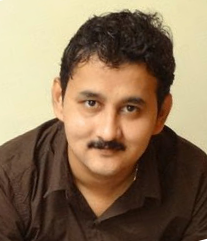 Santosh C Hulagabali, PhD, is an Editor of Open Interview. He heads Central Library of Central University of Haryana. He is passionate about anything that is creative, challenging and positively impacts self and others. Email: santosh@cuh.ac.in

Nice access of accessing publishing document